
A janitorial inspection checklist lists the items to check in each area of a building, with a score for each one. Used on a fixed schedule, it shows whether cleaning quality is holding, slipping or improving, and it gives you and your vendor the same facts to work from. Without it, feedback arrives as complaints, usually after a tenant or visitor has already noticed.
How to score
Use one scale for every item and write down what each number means, so two people inspecting the same room reach the same score.
| Score | Meaning |
|---|---|
| 5 | Clean, complete, nothing to correct |
| 4 | Minor miss that an occupant would not notice |
| 3 | Noticeable miss; correct by the next visit |
| 2 | Several misses or one that occupants will notice; correct the same day |
| 1 | Area was not cleaned or is unsanitary; correct immediately |
Average the scores by area and for the building. Track the average over time, and look at which areas and which items score lowest. A photo beside any score of 3 or below removes the argument later.
The checklist, by area
Entrances and lobby
- Entrance glass and doors free of fingerprints and smudges
- Floors clean to the edges and corners; mats vacuumed
- Reception surfaces and seating dusted and wiped
- Waste bins emptied and relined
- Elevator doors, buttons and tracks clean
Restrooms
- Toilets, urinals and sinks cleaned and disinfected
- Mirrors and fixtures free of spots
- Soap, paper towels and toilet paper stocked
- Floors mopped, including behind fixtures and around drains
- Partitions, door handles and dispensers wiped
- No odor
Offices and workspaces
- Waste and recycling removed
- Carpets vacuumed, including under desks and along walls
- Horizontal surfaces dusted where clear of papers
- Touchpoints wiped: door handles, light switches, shared equipment
- Interior glass free of smudges
Break rooms and kitchens
- Counters, tables and sinks cleaned
- Appliance exteriors wiped
- Floors swept and mopped
- Waste removed; bins wiped
- Paper goods and soap stocked
Corridors, stairs and common areas
- Floors clean to the edges
- Handrails and stair treads clean
- Vents, ledges and signage dust-free
- Drinking fountains cleaned
Janitor closets and supplies
- Chemicals labeled and stored correctly
- Safety data sheets available on site
- Equipment clean, working and put away
- Paper goods, soap and liners in stock
- Mops and cloths clean, not left wet
Floors and periodic work
- Hard floors free of scuffs and buildup; finish even
- Carpet free of visible spots
- Periodic tasks completed on schedule (see the scope)
Add the areas your building has: exam rooms, production floors, docks, classrooms, fitness rooms. Each item should trace back to a line in your scope of work. If it is not in the scope, it should not be on the inspection.
Print this page to carry on a walkthrough, or copy the lists into the inspection app or spreadsheet you already use.
What to record every time
- Date, time and the name of the person inspecting
- The areas inspected and the score for each item
- A photo for anything scored 3 or below
- The correction needed, who owns it and the date it is due
- Sign-off once the correction has been checked
Some buildings prefer a simpler pass, needs correction, or not applicable for each item. That works for a quick check, but a 1 to 5 score shows the trend more clearly over time.
Beyond a visual check
A walkthrough shows what looks clean. Healthcare and food facilities often add a test of what is clean. An ATP meter measures organic residue left on a surface after cleaning. A fluorescent marker applied before cleaning and checked afterward under ultraviolet light shows whether a surface was wiped at all. Most offices do not need either, but they are worth asking a vendor about for clinical spaces.
How often to inspect
Inspection works in layers. The vendor should be checking its own work far more often than you do.
| Who | What | How often |
|---|---|---|
| Cleaning crew lead | Confirms the assigned work was completed | Every shift |
| Vendor's supervisor | Walks priority areas and records what was found | Daily to weekly, depending on the building |
| You and the vendor together | Scored walkthrough of the whole building | Monthly, or every 30 to 45 days |
| Account review | Trends, recurring issues, changes to the scope | Quarterly |
If the only inspection that ever happens is yours, the vendor is using you as its quality control.
What to do with the results
- Share every scored inspection with the vendor within a day
- Agree a date for each correction and check it on the next visit
- Look for patterns: the same restroom, the same night of the week, the same task
- Raise repeated issues as a process problem, not a one-off miss
- Review the trend each quarter and adjust the scope where the building has changed
A falling score over two or three inspections is the point to have a direct conversation, and a useful record if you decide to look at other cleaning companies or go out to bid with a janitorial RFP.
How Skyward inspects
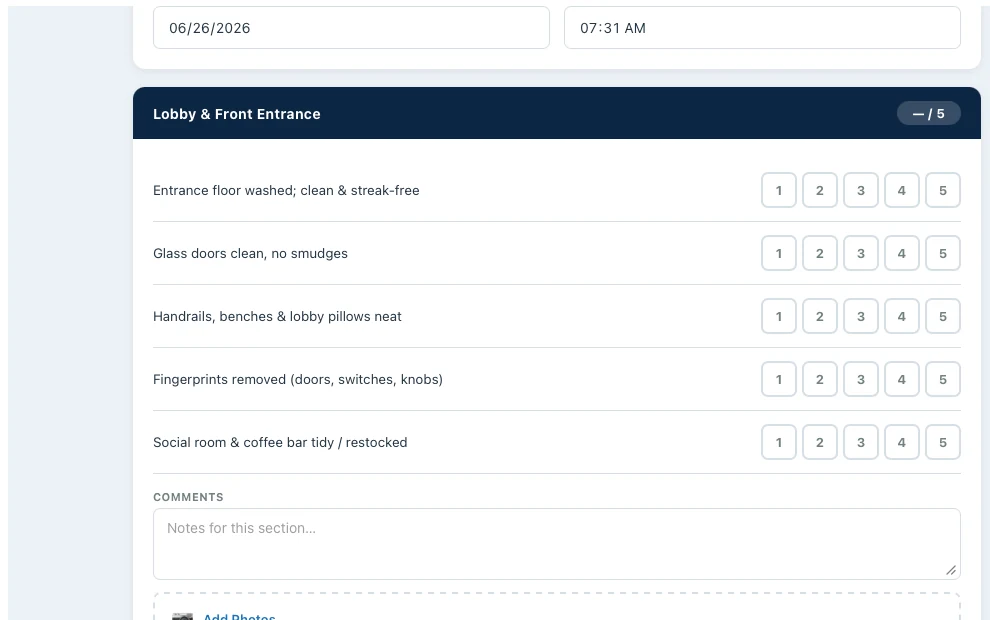
At Skyward, route completion is checked every shift, supervisors walk priority areas daily, and a joint inspection with the client takes place every 30 to 45 days, with items scored from 1 to 5 and photos attached. The full schedule is on our company facts page, and the solutions page explains how routes and zones make the checks possible.